
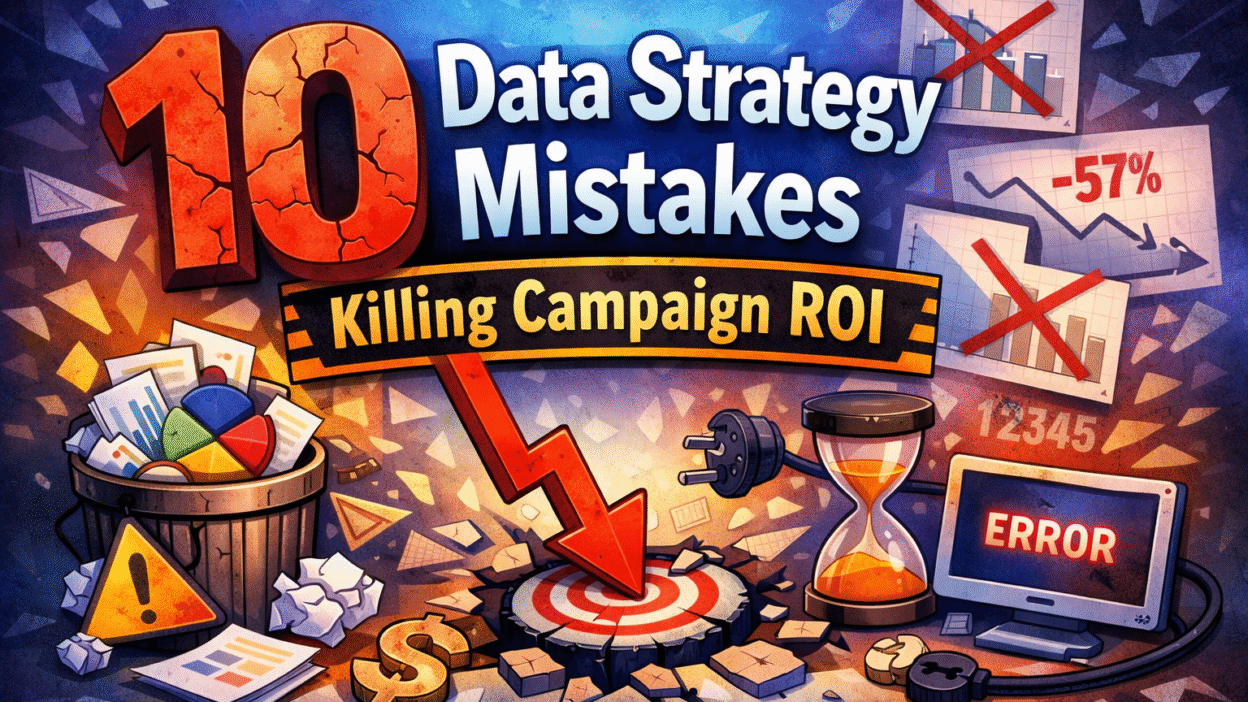
Alex paid thousands of his capital into a marketing campaign, thinking it would double or triple the amount he spent. But what happened was just the opposite of it; everything fizzled out, giving him dismal returns. Now, it clearly is a frustrating situation, but whom to blame?
Here, it is not your creative ideas or the amount you spent on ads; it is the flawed data strategy that is undermining everything from targeting to measurement.
According to recent studies, nearly half (45%) of the marketing data used for decisions is incomplete, inaccurate, or outdated. Which leaves 43% of CMOs doubting less than half of their data’s trustworthiness. This leads to massive waste: poor data quality alone can make companies unreachable to 6.75% of active customers, slashing revenue and ROI. Even worse, 83% of ROI measurements fail to capture true impact, missing up to 50% of potential returns by focusing on short-term metrics over long-term value.
With this guide, we will understand 10 critical data strategy mistakes that kill your campaign performance. Let’s explore them.
Table of Contents
- Introduction
- Mistake 1: No Clear KPIs or Goals
- Mistake 2: Poor Data Quality
- Mistake 3: Wrong Attribution Models
- Mistake 4: Data Overcollection
- Mistake 5: Siloed Teams
- Mistake 6: Vanity Metrics Focus
- Mistake 7: Underusing First-Party Data
- Mistake 8: Skipping Continuous Testing
- Mistake 9: Premature Over-Customization
- Mistake 10: Ignoring Market Context
- Best Practices and Fixes
Mistake 1: No Clear KPIs or Goals
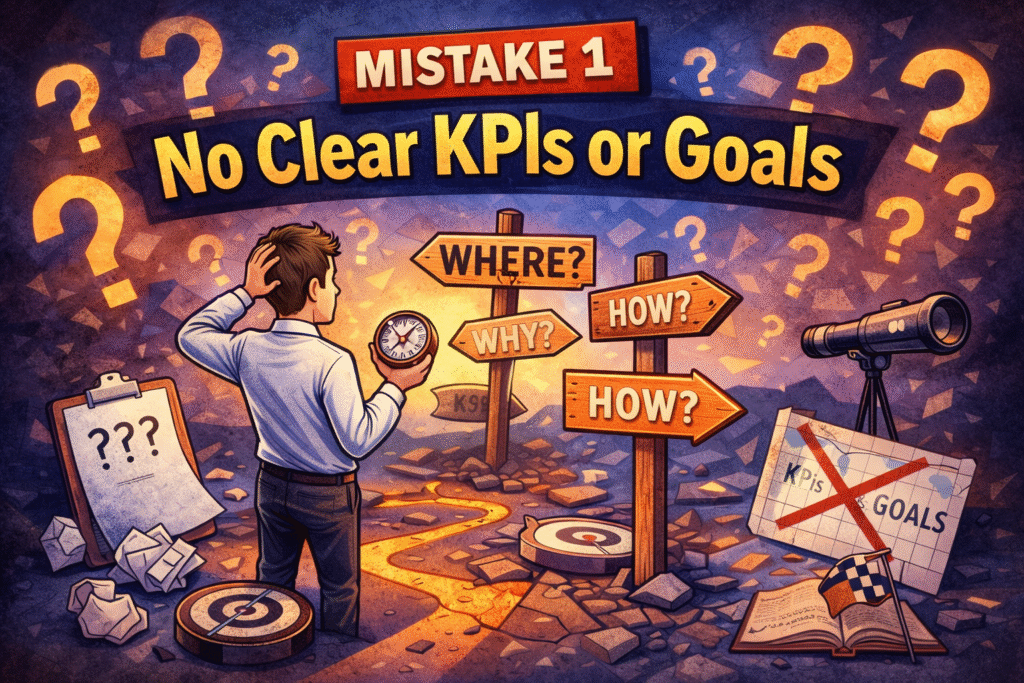
Alex did all the payments for his campaign, but what he did wrong was forget to set clear goals or KPIs. This often happens with marketers; they dive into their campaigns with vague goals like “boost brand awareness,” but without specifics like a target CPA under $20 or ROAS above 4x, you’re flying blind.
This single mistake kills ROI because it leaves success undefined. If put in simple terms, you chase shiny metrics that don’t tie up with your revenue, and you end up wasting your budget on non-converting traffic. According to a 2025 study, campaigns without precise KPIs see 30-50% lower efficiency because teams optimize for the wrong signals.
Quick Fix: You can fix these issues by starting every campaign with 2-3 SMART KPIs aligned to business outcomes. It is best to track them from day one using tools like GA4 and Google Ads. And do this especially for campaigns that focus on lead generation and revenue growth. Review weekly to pivot fast.
Mistake 2: Poor Data Quality
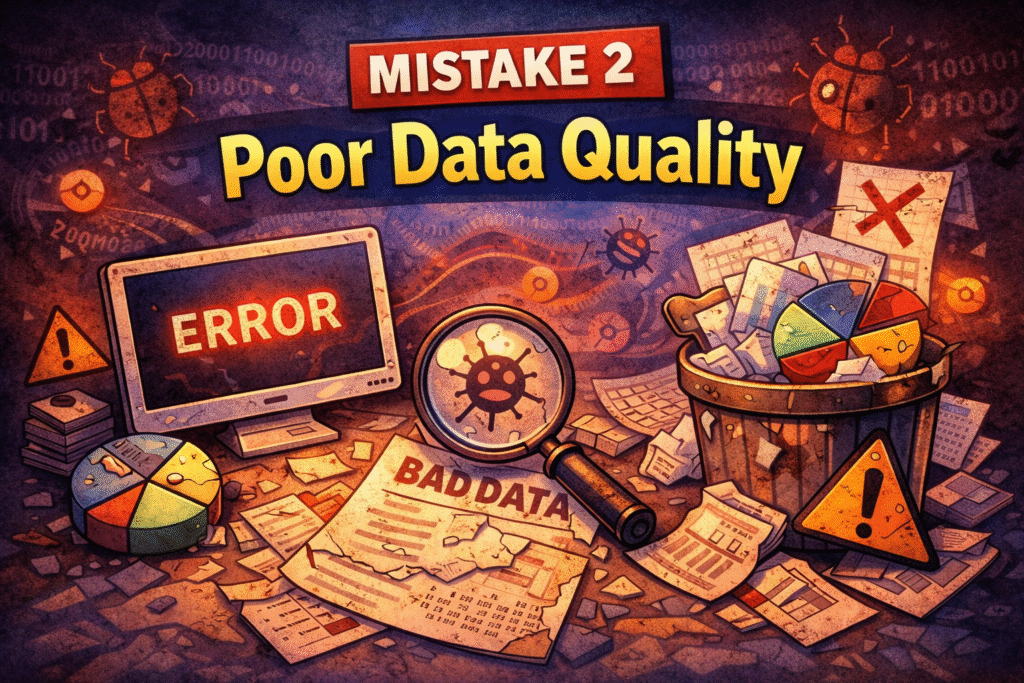
Just as using rotten vegetables in cooking ruins a dish, using bad data in marketing ruins your campaign. When marketers use outdated, duplicate, or wrong information for their campaign, they target the wrong audience and get bogus results.
Why does this destroy ROI? This happens because you are wasting your money on inefficient marketing. There are inaccurate customer lists that undermine effective audience segmentation and cause you to miss your perfect target audience. And then there is incorrect tracking that credits the wrong campaign. It is clear in the reports that nearly 50% of marketing data is unreliable, which causes 50% of the budget to go into the gutter.
Quick Fix: The best practice is to keep your customer information accurate and organized through strong data governance practices. You can do this task by cleaning up duplicate records and verifying the details. It will be more helpful if you use specialized tools like Segment or Clearbit. Do a thorough check every three months to ensure your data is reliable.
Mistake 3: Wrong Attribution Models
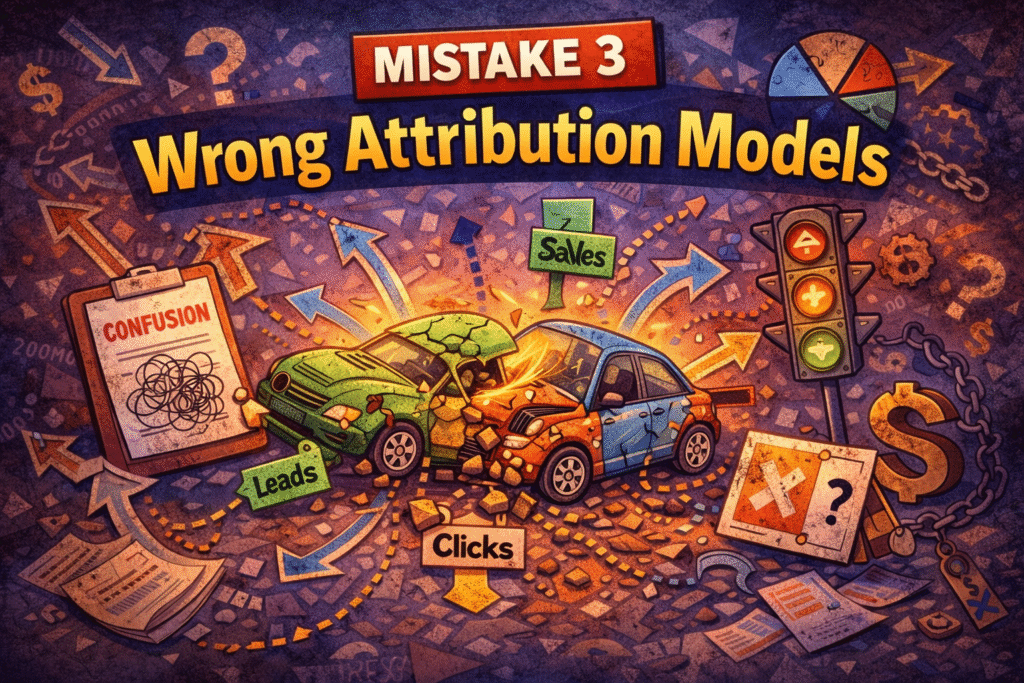
It has often happened that marketers give 100% of the credit to the very last ad a person clicked before buying. And they end up ignoring all the other ads and research the customer did earlier. It is a flawed and narrow view that misses the full customer journey from first seeing a product to finally purchasing it.
Focusing only on quick sales (bottom-funnel) hurts overall profit because it steals budget from brand-building efforts (upper-funnel) that create long-term growth. When the companies ignore the full journey of a customer, they misspend 20-40% of their money. And as a result, they underfund important channels like email, social media, or Meta Ads.
Quick Fix: To fix this issue, you must use data-driven or multi-touch attribution modeling in GA4 and your ad platforms. These models divide the credit for a sale across all the marketing steps a customer took, and this improves the revenue attribution across channels. And this results in improving the marketing attribution accuracy. Test these against a model that gives equal credit to all steps to see which approach gives you the most accurate view of your marketing performance.
Mistake 4: Data Overcollection
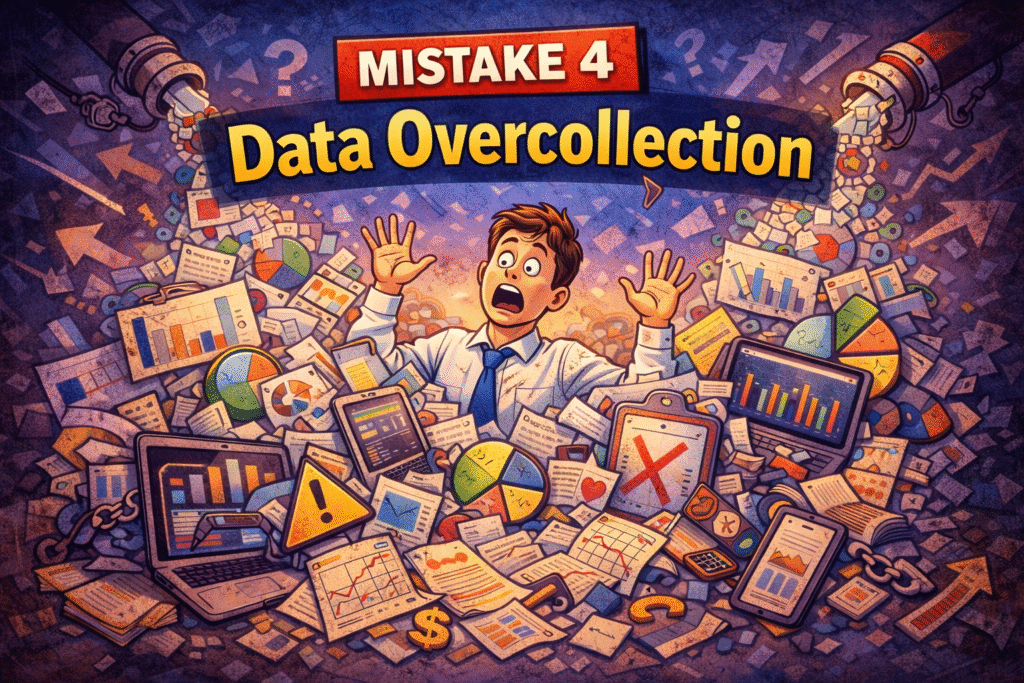
Collecting too much data without a plan is like hoarding spices. This will make your kitchen messy, and you will not be able to cook a tasty meal. It often happens that marketers grab every piece of information they can, but all that extra noise just makes it harder to make quick and smart decisions.
This excessive collection kills your profits by making it impossible to make decisions. Instead of spotting real opportunities, you waste time digging through trash. And expensive tools and storage bleed your budget. Research shows that over-collecting data slows down your work by up to 35%. This ends up causing you to miss out on easy wins.
Quick Fix: First you must decide what data you need before you start, and only collect information that directly helps you reach your main goals (KPIs). Do a regular check of your data to remove unnecessary information. Also, use tools like GA4 to focus only on the most important metrics.
Mistake 5: Siloed Teams

Your marketing, sales, and product teams are working alone. This creates confusion between teams instead of working together. As they don’t share data, you cannot see the full picture of your customers. And this scenario highlights the need for a better data integration.
This results in making decisions with incomplete information, which ruins your return on investment (ROI). Let’s say you are adjusting ad campaigns without even knowing if they are actually working, which leads to a waste of money. When teams work in silos and data is fragmented, it causes duplicated effort and misaligned goals. This in turn drops 30% of your campaign efficiency.
Quick Fix: Make sure you use shared, weekly updated business intelligence dashboards so that everyone agrees on what the numbers mean and is working together to drive revenue.
Mistake 6: Vanity Metrics Focus

It is useless to focus on likes and clicks; it doesn’t lead to actual sales. Marketers often obsess over vanity metrics instead of focusing on what really matters. It is important to focus on revenue, customer lifetime value (LTV), and real return on ad spend (ROAS).
Over 40% of your budget is getting wasted on ads that bring in visitors who never buy. All you are doing is focusing on “feel-good” metrics like high traffic but ignoring the fact that those visitors aren’t converting into customers. The real money is being missed because you aren’t focusing on the deeper stages of the sales funnel where actual sales happen.
Quick Fix: The perfect way is to focus only on key revenue numbers in your report. You can use tools like GA4’s revenue explorer to easily find what is actually increasing sales.
Mistake 7: Underusing First-Party Data

You are wasting money on generic third-party data to run ads even after owning valuable data about your customers from your website, emails, and CRM. As tracking cookies are disappearing and privacy laws like the General Data Protection Regulation (GDPR) are getting stricter, you are effectively flying blind by ignoring your own customer data.
Many known industry experts have confirmed that as tracking becomes less precise, CPAs are rising. According to some projections, companies failing to adapt to a first-party, data privacy-first model will experience 30–40% lower efficiency. Which will directly translate to higher acquisition costs. Without first-party tracking, platforms cannot optimize ads effectively, leading to wasted spending and lower ROI.
Quick Fix: It is better to gather the data your company owns (like website visits and purchases). Then combine this into one central system like Segment, a Customer Data Platform (CDP); ensure it respects privacy laws like the Digital Personal Data Protection (DPDP) Act and consent mode requirements; and use it to find customers or re-engage old ones in ads.
Mistake 8: Skipping Continuous Testing
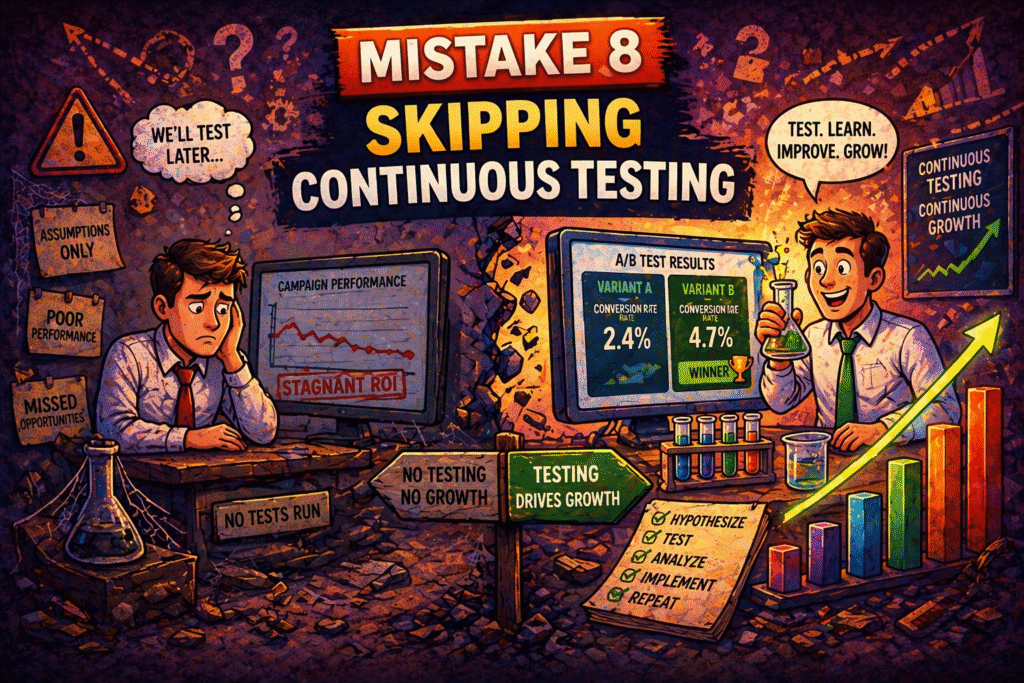
You wouldn’t sell a product without testing it first. However, there are many marketers who launch ads and then ignore them. Because they are not performing A/B testing, testing different versions, or updating for changes, they are missing out on sales, whereas all the competitors who follow the correct process are winning.
Your money is being wasted, and performance is hurting by 20-30% because you are sticking with early bad ideas like weak images or low bids. You won’t adapt to algorithm changes if you don’t test new ideas, and you will end up wasting budget on ads that no longer work. And this in turn hurts your conversion rate optimization (CRO) efforts.
Quick Fix: You must make testing and continuous experimentation a weekly habit. GA4 is the best tool for you; with this you can see what works best, then put more money into the winners and cut the losers.
Mistake 9: Premature Over-Customization
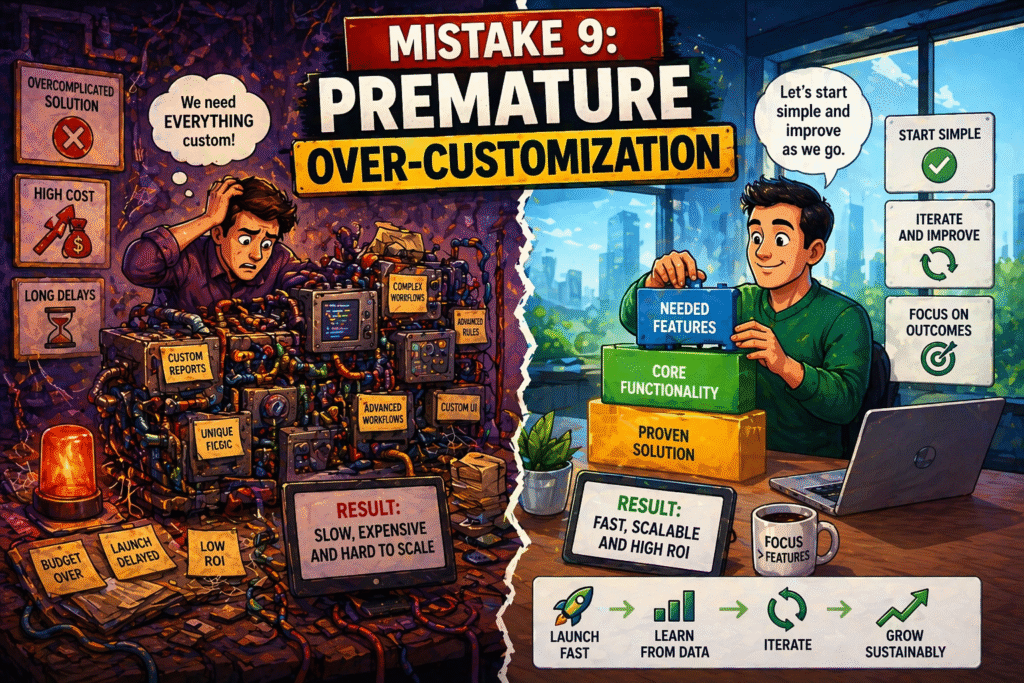
It might feel smart to jump onto fancy dashboards or AI models, but the result is the opposite. Before even providing basics like data flow and simple reporting, marketers over-customize workflows.
What hurts your return are customized and complex systems that can’t grow. Projects are delayed and costs skyrocket because these fragile, custom setups break whenever the main platform updates. This often happens by 30-40%, as teams waste their time on fixing problems rather than improving the product.
Quick Fix: You must start with simple and ready-to-use tools like basic GA4 setups. Just focus on proving that your strategy makes money first, then add customized and complex features later based on what the data shows works.
Mistake 10: Ignoring Market Context
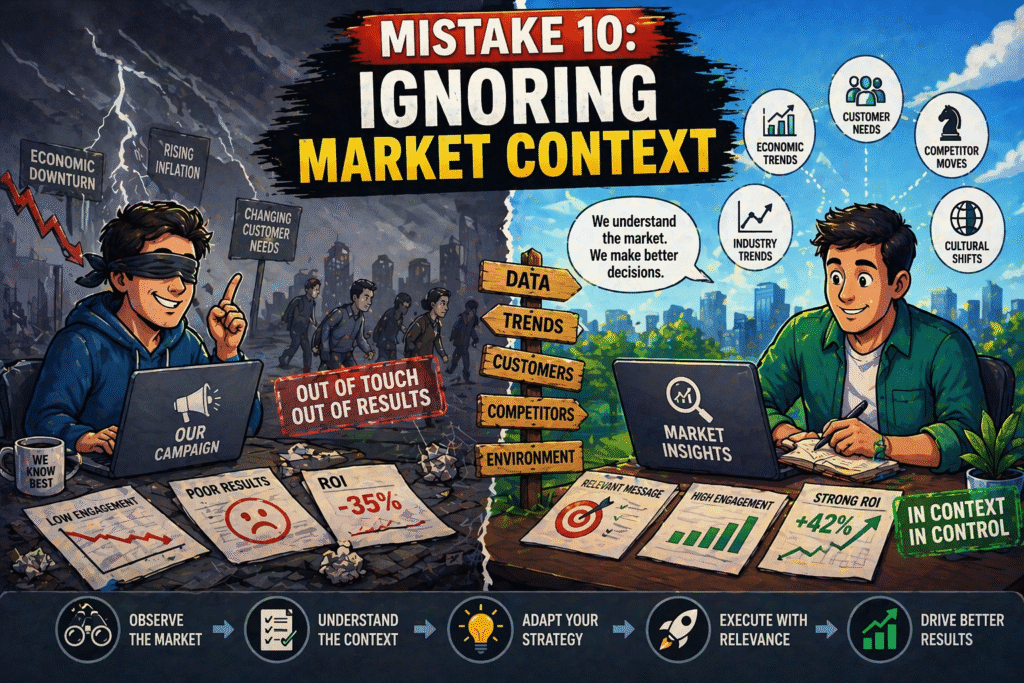
It’s like playing chess when you run marketing campaigns without even researching. You have no clue what your opponents are doing or what is happening on the board. Many marketers ignore the competition and market trends and only look at their own numbers. This makes them falsely believe that their internal data tells the whole story
What ruins your marketing profits is when you chase old and expensive trends. Your rivals are finding better and cheaper spots to advertise when you are overpaying to compete on popular keywords. You pay more and get less without understanding the current market. This makes your campaigns 25-40% less efficient.
Quick Fix: The best way is to use tools like SEMrush or Ahrefs to quickly check what competitors are doing. You must add this market research into your weekly strategy to stay fast and relevant.
Best Practices and Fixes
You don’t need a total overhaul to fix a failing data strategy. Making small and consistent changes is enough. You can use the 10 mistakes mentioned above to make your improvements. The best practice is to start by setting clear goals, cleaning up your data, and getting teams to work together to build momentum.
Focus on actions that directly increase revenue, such as using combined data dashboards and acting on your own customer data. This practice can boost your lost ROI by 20-50%. You must constantly test new strategies, review your performance every three months, and use tools like GA4 or CDPs to automate tasks. Marketers who do this see 3x better campaign results.
Ready to boost your ROI? Pick one fix today, measure the lift, and scale from there. Your campaigns will thank you.